Neurosymbolic
A model proposes in natural language, a logic made of rules checks that the proposal squares with the facts. The model proposes, the logic checks. Not an AI that talks better, one you can trust.
In 2026 artificial intelligence is ceasing to be a feature and becoming infrastructure: local, sovereign, verifiable. What sets owning it apart from renting it.
Nobody gets excited about the electrical wiring: we get excited about the light. With artificial intelligence the same thing is happening, in reverse. Everyone looks at the light, the chats, the demos, the assistant that writes the email. Almost nobody looks at the wiring.
Yet the wiring decides one thing, and not a small one: whether that intelligence is yours or rented.
In 2026 AI is ceasing to be a feature, one more button inside a piece of software, and becoming infrastructure. The clearest signal is where it runs.
So-called sovereign AI has become a boardroom topic. Not out of fashion: when the intelligence stays outside, so do the data, the knowledge and the control.
Beneath the shift there are three questions a company should ask before adopting AI.
A model proposes in natural language, a logic made of rules checks that the proposal squares with the facts. The model proposes, the logic checks. Not an AI that talks better, one you can trust.
The AI runs behind the company's perimeter and the data never leaves to be processed. Your knowledge serves to make you reason better, not to train someone else's model.
Infrastructure keeps how a decision is made and what has already been done. Not a subscription that, once switched off, takes everything with it. An asset that grows and remains.
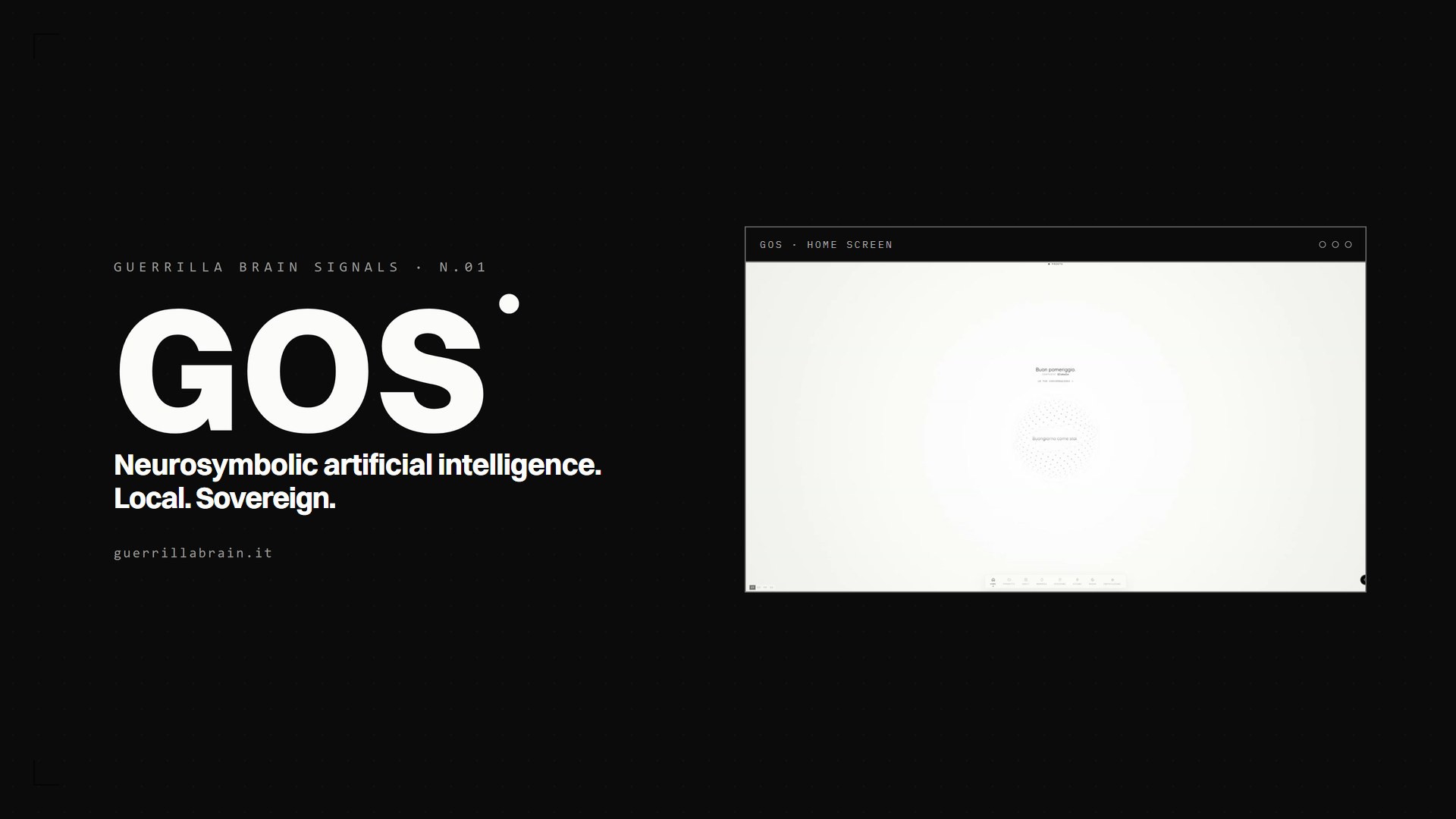
Put together, these three ideas explain why using AI and owning it are becoming two very different things. It is the distinction we work on every day: our neurosymbolic intelligence, GOS, is born exactly from here. But the point is not the name of the system, it is the question underneath.
The question to ask is not which AI to use, but whose is the one you are already using.